Main menu:

Site search

July 2026
M T W T F S S
« Jul    
 12345
6789101112
13141516171819
20212223242526
2728293031  

Categories

Tags

Useful Links

Investing in Mexico

“As individual investors, it makes sense that we would look to the investment activities of larger corporations and governments as an indication of where to put our money. When considering investing in Mexico, it might help to take a look at who else is investing here, what they are investing and what they are saying about it.

According to the United Nations Conference on Trade and Development, UNCTAD, the total foreign investment in Mexico in 2010 reached a total of $19 billion dollars (USD). This placed Mexico at Number Six in the list of countries receiving direct foreign investment, ahead of places like Germany and the United Kingdom.

Canada, as it turns out, is one of the leading investors in Mexico. From the year 2000 until 2010, Canada accumulated a combined investment of $9.125 billion USD in Mexico. The leading Canadian corporation investing in Mexico is the mining company, Gold Corp, which invests in real estate for reasons different from most of our clients. Last year, Gold Corp was the leading foreign investment entity in Mexico, with a total 2010 investment of $1.5 billion USD.

Other Canadian companies that heavily invested in Mexico last year include Bombadier, which will be building its Learjet 85 near Queretaro and auto part maker Magna International, which is building a new plant in the state of San Luis Potosí.

According to the State Department website, Mexico’s total foreign investment in 2009 was $14.4 billion USD, showing us what effect the economic downturn has had on Mexico in terms of foreign investment (FDI was $24.7 billion in 2001). The United States was (and still is) the largest foreign investor in Mexico, with a 2009 figure set at $6.4 billion USD.  The Netherlands and Spain are also large investors, with the Netherlands investing $7 billion USD in the first half of 2009.

Of course, Foreign Direct Investment (FDI) in Mexico has increased dramatically since the North American Free Trade Agreement (NAFTA) started, bringing with it many questions about its effect on the Mexican economy and culture. What isn’t in question, however, is that the Mexican economy presents many opportunities for investment and for realizing substantial returns on that investment.

How does this apply to the individual looking to buy real estate in Mexico? Certainly, the more foreign corporations that invest in Mexico, the more there will be an influx of foreigners coming to look after those investments. In addition, the large corporate investments here speak to the inherent growth of Mexico as an economy. Mexico is a country full of young, upwardly mobile and acquisitive citizens… many of them getting degrees, good jobs, houses and cars that were not in the picture for their parents or grandparents. Anyone who lives here can attest to the consistent building and development that has been continuing, despite a slowdown that occurred from the worldwide economic downturn and from the swine flu scare.

The swine flu scare is now a thing of the past. The increasingly negative press coverage of violence in Mexico fails to discriminate or make comparisons to levels of violence in other countries, but truthfully that violence affects a very tiny percentage of areas and people in Mexico. And the economic downturn’s effects are definitely diminishing. The Mexican population and the attractiveness of Mexico as a tourist and retirement destination continues to grow and flourish… we think that means investing in Mexico is a good idea, now more than ever.

Real Estate Trends for 2011

A recent review of real estate trends as reported from around the world point to good news for those of us invested in or investing in Mexico.

Latin America is quickly becoming the darling of investors of all kinds, as they cast their eyes around the planet, looking for the next area of rapid growth. The Economist magazine reports that the region has 15% of the world’s oil reserves, some of the largest stocks of minerals, 25% of the world’s arable land, much of it untilled, and 30% of its fresh water (from this article on a hotel industry website).Door in Merida, Yucatan, Mexico

The article goes on to say that many Latin American countries are actively embracing globalization, led by Brazil and Mexico… those two countries alone account for 65% of Latin America’s GDP. The hotel industry article points out that Mexico alone has over 110 new large hotel projects breaking ground in 2011.

A trio of real estate investment researchers from Price Waterhouse Cooper (PwC) in New York and London also report that Brazil and Mexico are two emerging real estate markets with enormous potential. “Where the US has gone boom-bust and Canada offers only modest growth, Latin America’s story centres on the enormous potential of two emerging markets – Brazil and Mexico. Together they account for two-thirds of the region’s population and most of its growth dynamics.”

While acknowledging that investors have concerns about the violence associated with the Drug War in Mexico and the corruption associated with the politicians there as well, the triple benefits of a hard-working population, a growing middle class and an increasing demand for homes and consumer goods bodes well for the future of real estate in the country. Mexicans have not over-borrowed or over-built, like their American counterparts, so there is still a demand for capital and for development.

The violence issue is always painted with a large brush in the US and International media, but as we know and as has been acknowledged publicly, the Yucatan is one of the safest places to be in Mexico. Not only that, a recent article in USA Today states that the safety record of the Yucatan compares its 2009 murder rate with that of Wyoming and Montana:

“The state with the lowest murder rate is Yucatán, the Gulf of Mexico state known for its beaches and Mayan ruins. Its murder rate of 2 per 100,000 was comparable to Wyoming and Montana.”

The Price Waterhouse Cooper analysts quote a survey of more than 1,000 leading real estate experts, including investors, developers, property company representatives, lenders, brokers and consultants.

“There’s a large hole to fill, especially for construction loans. New laws allow domestic pension funds to invest in real estate and infrastructure, which could increase property market liquidity and demand for product. We’re seeing the chequebook at the end of the tunnel.”

Even though the downturn in the US economy has definitely hurt Mexico, there are some ways that it has helped as well. More US manufacturers have relocated to Mexico recently, helped by the downturn in the Mexican peso. Retail is definitely on the rise here, as members of that growing middle class strive to live just like their American counterparts (the ecological impact of this phenomenon is another discussion…). There is a huge population of Mexicans with disposable income who don’t have a TV in every room or a car for every driver, so the potential is tremendous. And of course a growing economy also means a growing demand for real estate.

In a recent interview, Carlos Slim, the richest man in the world, told the reporter that he will be focusing on two aspects of his holdings in the year to come: mining and real estate. Mexico’s stock market hit an all time high early in December of this year. These signs and more point to a growing real estate market in the next year, even if the United States’ economy does not significantly improve.

Outside Merida: Motul

About a half hour outside of Merida to the east, Motul is one of the state’s largest smaller cities… bigger than Izamal, but definitely smaller than Merida. Motul has a proud history of being a Mayan city ruled by the Pech family (you’ll still find Pech descendants throughout the state…) and then a colonial city colonized by Francisco Montejo himself. Motul is known in modern times most famously for being the birthplace of Felipe Carrillo Puerto, a socialist governor of Yucatan in the 1920′s who was murdered by a firing squad in Merida in 1924.

Today Motul is a sleepier, smaller version of Merida. The town is home for people that either work in Merida or in one of the many maquiladoras in the surrounding countryside. The center of town boasts a park in the town square, a beautiful Franciscan monastery and church and a colonial city hall. The Felipe Carrillo Puerto museum faces the town market, which is also in the center of town.

As a colonial city, Motul still has many colonial buildings, some of which are coming up for sale. The city is small, with a population of about 21,000 people, but it has a bustling market, a large cathedral with many religious activities and events throughout the year as well as various stores and shops. Whereas, once upon a time, it may have been close to impossible for a foreigner to negotiate the purchase of a house in this area, those days are over and now we have seven listings in this fair city.

Here is a recent addition to our listings in Motul that is a lovely colonial building. Something similar in similar condition in Merida would easily cost three times as much. Here in Motul, you can still enjoy the renovation of a beautiful colonial building, and end up living in a lovely colonial city that is a hop, skip and a jump away from Merida, the capital of Yucatan.

Click here to read about an Old Palace for sale in Motul!

Chances of a Hurricane

Forecasters announced today that they think there is a 75% chance of a major hurricane hitting the United States coast this year. The water temperatures are warm, and the first named storm hit the Yucatan Peninsula in late June… they named it Alex.

You may have noticed that Alex did a lot of damage to cities in and around Monterrey, Mexico but you probably didn’t notice that there wasn’t any news, bad or otherwise, about Alex and his affect on the Yucatan. Because the homes of Merida and the Yucatan Peninsula rarely have to weather that kind of storm. The rule of thumb in the Yucatan is that a hurricane hits once every fifteen years. That’s far less than most places that ring the Gulf of Mexico, including the resort communities on the Mayan Riviera. And it may be why Merida was built in this location over 500 years ago by the Mayans. It’s inland location affords it protection from the worst effects of a hurricane, which diminishes as it travels over land, and the building practices here provide even more.

Many of the Yucatan’s homes are built either out of block or stone or both. If you see wood in a home, it is being used as beams, as a sunscreen or as decoration. Anything structural is heavily reinforced and able to withstand both wind and rain. Roof and garden drainage should always be considered when building or renovating a home, because tropical rains can drop a lot of water in a short amount of time. But with proper drainage, reinforced stone or block walls and tile or cement floors, the homes here are built to withstand just about anything Mother Nature can dole out in the hurricane department.

In 2002, Hurricane Isidore swept right over Merida and Progreso on the coast. While there was flooding in Progreso, and some wave action that damaged unreinforced homes, the damage was minute compared to Monterrey’s recent tropical storm, and especially compared to the effects of Hurricanes Rita or Katrina in recent years.  I think those who lived through it would agree that the biggest casualty of Hurricane Isidore were the trees; quite a few older trees were blown over during the twenty four hours that Isidore stayed in Merida. But the minute the storm was done, the local Mexican army came out in droves to clear the roads, chopping and clearing trees. And now, nine years later, the trees are back, bigger and better than ever.

Hurricanes are something to keep in mind when you are building or buying in the Yucatan, but they are not something to be afraid of.  Builders and architects here know how to build for hurricane weather, and the ancient Mayans knew where to put their cities. Even at the beach, modern construction has improved and gotten smarter, and longer setbacks and seawalls are required in many communities.  Hurricanes give plenty of warning and can be prepared for (unlike earthquakes and many other natural disasters). If you are lucky enough to buy an old colonial house here in Merida, you can be reassured that it has already withstood a few hurricanes.

We sleep soundly at night here, even in hurricane season.

For more information, here is the article about the recent hurricane forecast.

Sisal Developments

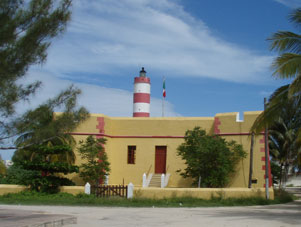
Municipal authorities have plans for a major program to promote tourism along the western Yucatan coast, to both Sisal and Celestun, including cultural and recreational activities for visitors.  Pointing out that Sisal was historically the first port of entry into Yucatan, Director of Culture Arturo Sosa Ortiz added that these plans are already underway, including a project to restore the colonial monuments and another to restore the old lighthouse of Sisal, where a museum is planned.

Sosa Ortiz mentioned that Sisal and Celestun are not areas well known to local visitors, but a larger proportion of foreign residents and visitors may be more familiar with these pueblos, as many of them live and vacation in the two communities.  Canadians, for example, come for duck hunting to these areas between October 15 and February 28th.

“ This is an important source of income for the port, for the shopkeepers and for the tourist guides.  In second place is the arrival of Europeans who build winter homes in the area to escape bitter weather at home.”

Sosa Ortiz commented that about 150 extranjeros (foreigners) now reside in the area. In addition, a growing cadre of Canadians who have rented in the past are beginning to buy homes in Sisal.

One of the principal problems that will first be addressed is garbage disposal and to that end, very shortly a new sanitary landfill will be ready.   Incentive programs have been introduced to create a community consciousness of the need for cleanliness. For example, the collection plastic and glass bottles is now being encouraged. Until just recently, there had been nowhere to deposit them.  This problem should be fixed this month in August 2010 when the new sanitary landfill is begun, just off the road between Hunucma and Sisal.

“We have $30 million pesos to spend, but the ejidetarios, the owners of the land, still have not reached agreement.”

Well, this sounds like a step in the right direction. We hope we’ll hear about a recycling program for those plastic and glass bottles, and we look forward to seeing what happens and will keep you updated as we find out more!

Welcome to Our New Website!

Welcome to Tierra Yucatan, the real estate agency offering the best selection of real estate in Yucatan, Mexico and the city of Merida!

There’s nothing new about the wide array of rare and unique properties and the properties of exceptional value… all of which can still be found on our website.  The front page now highlights some of the incredible luxury properties in our collection. Of course, it is still easy to browse our entire inventory by clicking the links on the left. Either click on “All Properties” to see every last one of them, or click on the various categories to see just Beach Homes, for instance. Or just Haciendas & Ranches.

Maybe you are looking for an inexpensive retirement home or winter getaway… try looking at “Newer Neighborhoods” for more modern homes at very reasonable prices.  Or if you want to start or take over a business here in Merida, check out our “Commercial Properties” category, with listings on everything from warehouses to coffee shops to bed & breakfasts.

Are you looking for a Vacation Rental? We have listings of both long-term and short-term rentals, in Merida, in the surrounding Yucatan Peninsula and even a few in the state of Chiapas. Vacation rentals are a great alternative to hotels and a wonderful way to “try before you buy” and buy your own home in Merida.

For a more specific search, go to “Property Search” on the right hand side of the page. Click on “Property Search” and there you’ll have a very detailed way of searching for the home or land that you want to buy. You can specify everything from number of bedrooms to type of water system, allowing you to just look at the listings that really interest you.

Just below that, there’s a link called Contact Us. Each Tierra Yucatan real estate agent is listed here, along with their photo, some background on them, and their contact information. Contact our office on Calle 66 in the Centro (address and phone at the bottom of every page), or just email or phone one of our agents directly.

For information about buying real estate in Mexico or detailed information about Merida and the Yucatan, explore the other links on the right. We give you a brief synopsis of the buying and selling processes here in Mexico, as well as some helpful links to other Yucatan websites and a list of some of our preferred hotels and other accommodations in the area. If that doesn’t answer your questions, perhaps our FAQ page with a list of the frequently asked questions will help.

Further down on the right, there’s a link to our Facebook page. We encourage you to check it out and sign up to “like” it and “follow” it… as we get new noteworthy listings, we’ll be sending some of the information to our Facebook friends. Be sure to become a Facebook friend so you can find out about properties as they come on the market!

Did we mention that on the first page of the website, you can not only check the Merida weather, but you can read rotating testimonials from an ever-growing list of happy customers.

Below that, you can read excerpts from the last three posts on this blog, too, for new and timely information not only on new properties, but also on general real-estate related news and events here in the Yucatan.

Did we mention videos? Tierra Yucatan has our own YouTube channel, and we have some of our YucatanLiving.com Houses of Merida videos there, as well as a growing number of videos made of the houses we represent that are for sale and rent.

There’s more that has been upgraded on the new Tierra Yucatan website! When you click on “More…” to see a property, the property page that you come to has a wealth of information about that particular offering. Not only is there a detailed description, but now there are “Print” and “Share” buttons so you can print out the properties you like (and want to see on your trip to Merida) or click on the “Share” button and send an email to a friend with the property information and link included. The “Share” button also allows you to bookmark the page if you want, or share it on Facebook, Digg, put it on your Amazon Wish List and a million (it seems!) other places. Try it out!

Our photo gallery on each property page now allows for larger photos of various dimensions, so now we can show you photos of just how high that ceiling really is! And each property’s Google Map shows you where in Merida the property is for your reference.

Oh, and don’t forget… you can see the entire website in Spanish too! Just click under the phone number at the top of each page.

Last but not least is this blog… a place for us to notify you of new listings and talk about what’s new and happening now in the real estate world of Merida and the Yucatan. Each blog post allows for comments, and we welcome your participation and interest.

We worked hard to improve our website without losing the benefit of easy navigation and a clean look. We hope you enjoy it and we look forward to hearing from you